

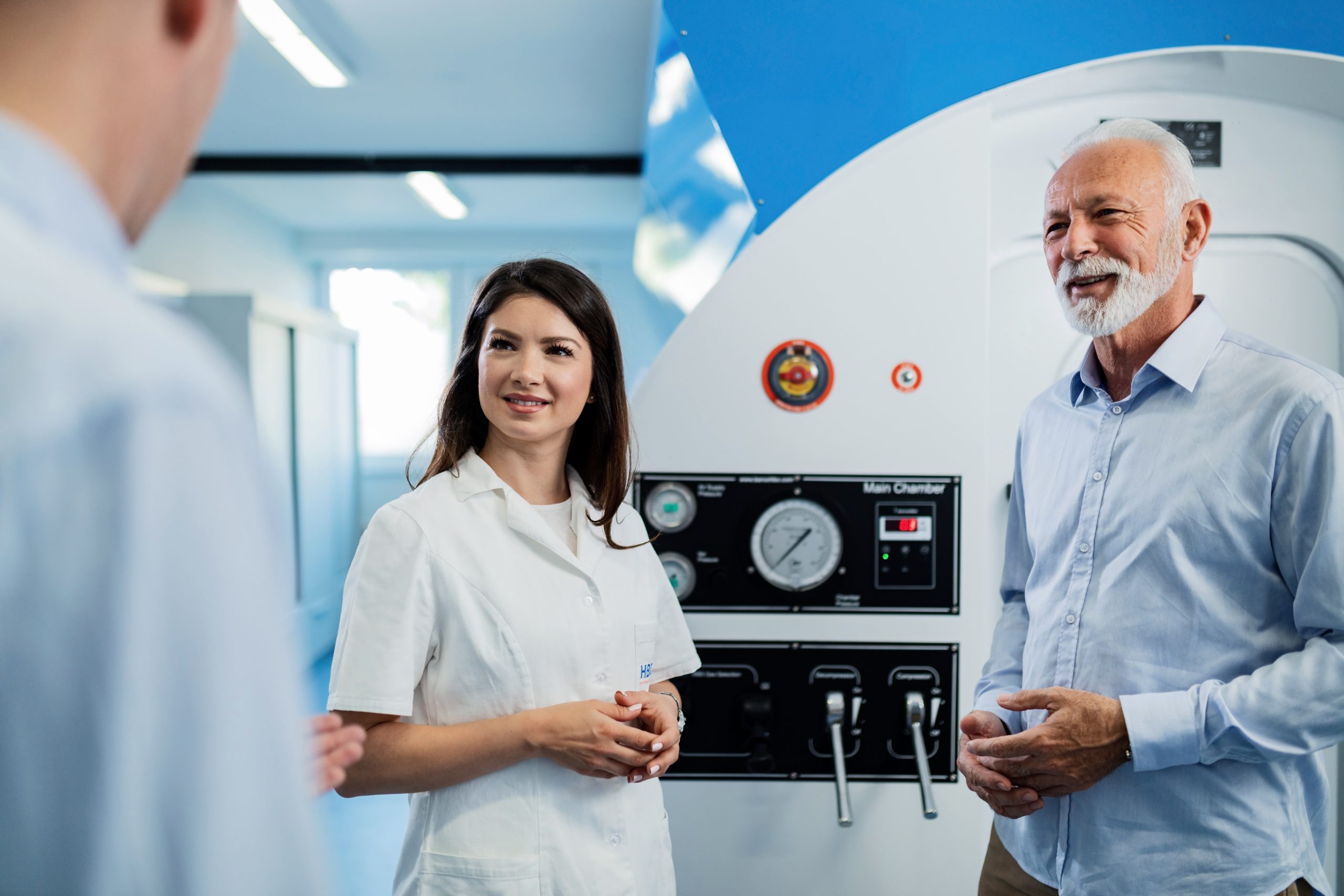
Hyperbaric Oxygen Therapy (HBOT) has emerged as one of the most powerful tools in modern medicine for healing, recovery, and long-term health optimization. While many people are familiar with “mild” hyperbaric chambers operating at lower pressures, decades of research clearly show that 2.0 atmospheres absolute (ATA) represents the optimal balance of safety, effectiveness, and versatility. This article explains what HBOT is, why 2.0 ATA matters, how it compares to lower pressures, and why expanding access to true medical-grade HBOT has the potential to transform healthcare, recovery, and longevity worldwide.
What Is Hyperbaric Oxygen Therapy (HBOT)?
Hyperbaric Oxygen Therapy (HBOT) involves breathing pure oxygen inside a specialized chamber where the air pressure is increased above normal atmospheric levels. Under these conditions, oxygen dissolves more efficiently into the blood plasma and body tissues—far beyond what is possible by breathing oxygen at normal pressure.
This oxygen-rich environment accelerates healing, reduces inflammation, fights infections, enhances blood flow, and supports tissue repair. HBOT is an established medical therapy with applications ranging from wound care and radiation injury to brain health, athletic recovery, and even longevity research.
Why Pressure Matters in HBOT
Not all hyperbaric therapy is created equal. One of the most important variables in HBOT is pressure, measured in atmospheres absolute (ATA). While some chambers operate at lower pressures (such as 1.3–1.5 ATA), extensive clinical evidence shows that 2.0 ATA delivers significantly superior therapeutic benefits.
Research into HBOT spans more than 50 years, with over 1,400 published scientific articles cataloged by the Undersea and Hyperbaric Medical Society (UHMS). Among these, hundreds of studies specifically utilize 2.0 ATA, making it the most researched and widely accepted pressure level in medical hyperbaric care.
Why 2.0 ATA Is the Medical Gold Standard
1. Maximum Oxygen Delivery
At 2.0 ATA, oxygen dissolved in plasma can increase to nearly 200% of normal levels, allowing oxygen to reach damaged tissues even when blood flow is compromised. Lower pressures simply do not achieve the same level of oxygen diffusion.
2. Stronger Angiogenesis (New Blood Vessel Growth)
High dissolved oxygen levels at 2.0 ATA trigger powerful angiogenic signals, stimulating the growth of new blood vessels. This improves long-term circulation and tissue regeneration.
3. Proven Effectiveness Across Conditions
For conditions such as non-healing wounds, radiation injury, diabetic ulcers, crush injuries, and ischemic damage, studies consistently show better outcomes at 2.0 ATA compared to lower pressures.
4. Better Safety Profile Than Higher Pressures
While higher pressures (above 2.5–3.0 ATA) can increase the risk of oxygen toxicity, 2.0 ATA hits the ideal “sweet spot”—maximizing benefits while maintaining excellent safety and tolerability for most patients.
Limitations of Lower-Pressure Hyperbaric Chambers
Lower-pressure HBOT (1.3–1.5 ATA) may offer mild wellness benefits, but it has significant limitations:
Insufficient oxygen saturation for many medical conditions
Reduced effectiveness for serious or chronic injuries
Longer exposure times with diminishing returns
Exclusion from many FDA-approved and off-label treatment protocols
In short, chambers unable to reach 2.0 ATA cannot deliver the full therapeutic potential of hyperbaric oxygen therapy.
Conditions Commonly Treated at 2.0 ATA
Most FDA-approved HBOT indications are treated within the 2.0–2.5 ATA range, including:
Diabetic foot ulcers
Carbon monoxide poisoning
Crush injuries and compartment syndrome
Radiation tissue damage
Acute ischemic injuries
Severe anemia
Bone infections (osteomyelitis)
Many emerging and off-label applications—such as traumatic brain injury, stroke rehabilitation, neurodegenerative diseases, chronic fatigue, fibromyalgia, and anti-aging protocols—also center around 2.0 ATA.
Top Benefits of HBOT at 2.0 ATA
HBOT at or below 2.0 ATA has been associated with a wide range of benefits, including:
Faster wound and injury healing
Reduced inflammation and swelling
Enhanced stem cell mobilization
Improved circulation and oxygen delivery
Neuroprotection and nerve regeneration
Immune system modulation
Improved exercise recovery and endurance
Support for brain health and cognitive recovery
Mild anti-aging and longevity effects
The Accessibility Problem in HBOT
Despite overwhelming evidence supporting 2.0 ATA, access to true medical-grade HBOT has traditionally been limited to expensive, clinic-based systems. This has prevented widespread adoption for recovery, rehabilitation, and long-term wellness.
Lower-pressure “home” solutions have existed, but they fail to meet the minimum pressure threshold required for many clinically meaningful outcomes.
A New Era for Hyperbaric Oxygen Therapy
Advances in technology are now breaking these barriers. Safe, reliable, and effective delivery of 2.0 ATA HBOT outside traditional clinical settings has the potential to revolutionize healthcare—making recovery, longevity, and optimization accessible to millions.
By aligning with decades of validated medical research and solving long-standing access challenges, 2.0 ATA HBOT is poised to move from niche clinical use into mainstream, tech-enabled healthcare.
Conclusion
Decades of scientific evidence confirm that 2.0 ATA is the most versatile, effective, and safe pressure level for Hyperbaric Oxygen Therapy. It represents the ideal balance between oxygen delivery and safety, making it the global gold standard for both approved medical treatments and emerging applications.
As access expands beyond traditional clinics, the transformative potential of HBOT—for healing, performance, and longevity—can finally be realized at scale. The future of oxygen-based medicine is here, and it starts at 2.0 ATA.